

Motorradführerschein Kaufen
Add a review FollowOverview
-
Founded Date July 10, 1919
-
Sectors Business
-
Posted Jobs 0
-
Viewed 4
Company Description
30 Inspirational Quotes On Buy A Driving License Legally
Navigating the Process: How to Legally Obtain a Driving License in Germany
Germany, known for its effective public transport and extensive network of Autobahns, provides both locals and visitors the chance to check out the nation by car. However, obtaining a driving license in Germany can be a complex and in some cases complicated procedure, particularly for those not familiar with the German administrative system. For people wanting to drive legally and safely in Germany, comprehending the requirements, treatments, and subtleties of the licensing process is necessary. This post supplies a thorough guide to lawfully obtaining a driving license in Germany, including crucial actions, regularly asked concerns, and practical suggestions.
Understanding the German Driving License System
In Germany, the driving license system is governed by the Fahrerlaubnisgesetz (Driver’s License Act) and administered by the Fahrerlaubnisbehörde (Driver’s License Authority), which belongs to the city government. There are several kinds of driving licenses in Germany, each corresponding to various categories of lorries. The most typical license types are:
- Class B: This license allows you to drive vehicles and motorcycles with as much as 125 cc.
- Class A1, A2, and A: These licenses are for various classes of motorcycles.
- Class C and C1: These are for heavy products lorries.
- Class D and D1: These are for buses and other big traveler automobiles.
Actions to Obtain a German Driving License
-
Identify Your Eligibility
- EU/EEA Residents: If you are a local of the European Union (EU) or the European Economic Area (EEA), you can typically utilize your existing driving license for as much as 6 months after relocating to Germany. After this duration, you may need to exchange your license for a German one, depending on the country of problem.
- Non-EU/EEA Residents: If you are from a nation outside the EU/EEA, you can utilize your global driving authorization (IDP) together with your valid driving license for a minimal time. After this period, you will require to go through the complete licensing process or exchange your license if your country has a mutual arrangement with Germany.
-
Exchange Your Foreign License (if relevant)
- Countries with Reciprocal Agreements: Some nations, such as the United States, have agreements with Germany that enable the exchange of driving licenses. To exchange your license, you will need:
- A legitimate driving license from your home nation.
- A worldwide driving license (IDP).
- Proof of residency in Germany (e.g., a Meldebestätigung or registration certificate).
- A completed application type from the Fahrerlaubnisbehörde.
- A charge, which varies by state.
- Countries without Reciprocal Agreements: If your country does not have a mutual agreement, you will need to go through the full licensing procedure, that includes theoretical and dry runs.
- Countries with Reciprocal Agreements: Some nations, such as the United States, have agreements with Germany that enable the exchange of driving licenses. To exchange your license, you will need:
-
Take a Medical Examination
- All applicants for a German driving license should go through a medical assessment to ensure they meet the health requirements for driving. This evaluation is typically performed by a Fahrzeuguntersuchungsstelle (vehicle assessment station) or a designated physician. The assessment consists of examine vision, hearing, and physical fitness.
-
Total the Theoretical Test
- The theoretical test, or Theorietest, consists of multiple-choice questions on traffic rules, road indications, and safe driving practices. The test is offered in a number of languages, including English, and can be taken at a Theorieprüfungszentrum (theory test center).
- Preparation for the test is crucial. You can use study materials such as practice tests and books to familiarize yourself with the content. Many driving schools offer courses to assist you prepare.
-
Take Driving Lessons (if needed)
- If you are going through the full licensing process, you will need to finish a defined number of driving lessons with a certified Fahrschule (driving school). The number of lessons required can differ depending on your experience and the kind of license you are making an application for.
- During these lessons, you will learn the practical elements of driving in Germany, including local traffic laws and roadway conditions.
-
Complete the Practical Test
- The practical test, or Praktikum, is conducted by a Fahrschulelehrer (driving trainer) and typically lasts about 45 minutes. The test includes:
- A pre-test inspection of the vehicle.
- Driving in different traffic conditions, consisting of city and backwoods.
- Maneuvering jobs such as parallel parking and hill starts.
- You need to demonstrate your capability to drive safely and follow traffic guidelines. If you fail the test, you can retake it after a specific duration.
- The practical test, or Praktikum, is conducted by a Fahrschulelehrer (driving trainer) and typically lasts about 45 minutes. The test includes:
-
Participate In a First Aid Course
- Before you can receive your German driving license, you must finish a first aid course, referred to as Verkehrsrettungsdienst (traffic rescue service). This course teaches you basic very first aid abilities and how to react in emergency circumstances on the road.
-
Receive Your Driving License
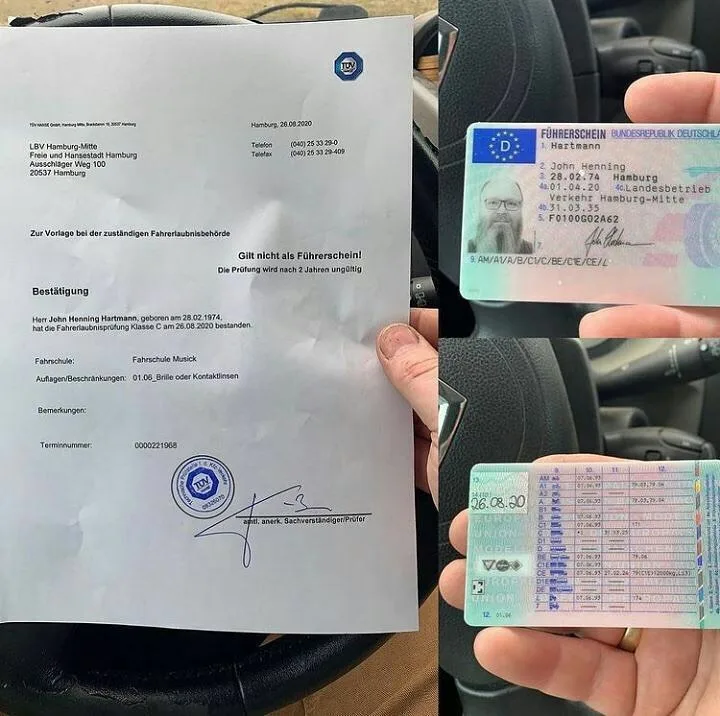
- As soon as you have actually passed all the needed tests and completed the necessary courses, you will receive your German driving license. The license is normally provided by the Fahrerlaubnisbehörde and stands for a specific duration, after which you may need to restore it.
Often Asked Questions (FAQs)
Q: Can I drive in Germany with a foreign driving license?
- A: Yes, if you are a visitor, you can drive in Germany with a global driving permit (IDP) and your valid driving license for a limited time. If you are a resident, you can use your foreign license for as much as six months, after which you may need to exchange it or go through the full licensing procedure.
Q: How do I exchange my foreign driving license for a German one?
- A: If your nation has a mutual contract with Germany, you can exchange your license by providing a valid foreign license, an IDP, proof of residency, and a completed application type. The process may differ by state, so it is advisable to check with your regional Fahrerlaubnisbehörde.
Q: What is the minimum age to get a driving license in Germany?
- A: The minimum age to acquire a Class B driving license in Germany is 18 years. For motorbikes, the minimum age varies depending on the class of the motorbike.
Q: Do I require to take a medical evaluation to get a German driving license?
- A: Yes, all applicants need to go through a medical examination to ensure they meet the health requirements for driving. The evaluation includes examine vision, hearing, and fitness.
Q: How numerous driving lessons are required?
- A: The number of driving lessons required varies depending upon your experience and the kind of license you are getting. Generally, a minimum of 12 to 15 lessons is needed for a Class B license. This number can increase if you have no prior driving experience.
Q: What is the cost of obtaining a German driving license?
- A: The cost of getting a German driving license can vary. It includes costs for the medical exam, theoretical test, practical test, driving lessons, and the first help course. The total expense can range from EUR500 to EUR1,000, depending upon your state and the driving school you choose.
Q: Can I take the theoretical test in a language besides German?
- A: Yes, the theoretical test is readily available in numerous languages, including English. You can choose the language in which you wish to take the test when you sign up for it.
Q: What happens if I stop working the dry run?
- A: If you stop working the dry run, you can retake it after a specific period, which is normally a couple of weeks. You may need to take extra driving lessons to enhance your abilities before retaking the test.
Tips for a Smooth Process
- Start Early: The procedure of getting a German driving license can be lengthy, especially if you need to finish the full licensing process. Start early to prevent any hold-ups.
- Select a Reputable Driving School: Select a driving school with a good credibility and knowledgeable instructors. This can considerably enhance your possibilities of passing the tests.
- Practice Regularly: Regular practice is vital, specifically if you are brand-new to driving in Germany. Familiarize yourself with the regional traffic rules and road conditions.
- Stay Informed: Regulations and requirements can change, so stay informed by inspecting the official websites of the Fahrerlaubnisbehörde and führerschein kaufen 400 Euro the Verkehrsministerium (Ministry of Transport).
- Prepare Thoroughly for the Tests: Use research study products and practice tests to get ready for the theoretical test. For the useful test, ensure you are positive in your driving abilities and acquainted with the test path.
Obtaining a driving license in Germany is a structured and comprehensive procedure created to make sure that all drivers are well-prepared and efficient in operating a vehicle safely on German roadways. Whether you are a new resident or a visitor, understanding the actions and requirements is important for a smooth and successful experience. By following the described treatments, preparing thoroughly, and looking for professional assistance, you can navigate the process and enjoy the freedom and convenience of driving in Germany.
For those who are devoted to the process, the rewards are substantial. A German driving license not just allows you to drive within Germany but is likewise recognized in numerous other countries, offering you with the versatility to check out beyond Germany’s borders. Safe travels!