

Cheap Counterfeit Money
Add a review FollowOverview
-
Founded Date December 3, 1912
-
Sectors Business
-
Posted Jobs 0
-
Viewed 21
Company Description
Five Killer Quora Answers To Fake Dollar Bills
Understanding Fake Dollar Bills: The Dangers and Detection Methods
In an age where international economies are linked and cash still reigns supreme, the presence of counterfeit currency postures a significant hazard to both customers and companies. Regardless of developments in payment approaches, fake dollar bills continue to flow, affecting the economy and developing threats for unwary victims. This post looks into the world of counterfeit currency, exploring its history, detection methods, and the preventive measures that can be taken to fight it.
The History of Counterfeit Currency
The phenomenon of counterfeit money is not a recent advancement. Historical records show that as far back as ancient Greece, individuals have actually looked for to replicate coins and banknotes in a quote to benefit illegally. Nevertheless, the arrival of paper currency has considerably increased the complexity and elegance of counterfeiting.
In the United States, the counterfeiting of federal notes started almost instantly after the introduction of the first paper currency in 1861. In response to the rampant forgery, the U.S. Secret Service– initially developed to combat counterfeit currency– was formed in 1865. Today, counterfeiting continues to develop, including innovative technology to produce even more realistic reproductions.
Table 1: Key Historical Points of Counterfeit Currency in the U.S.
| Year | Occasion |
|---|---|
| 1861 | Intro of the very first U.S. paper currency |
| 1865 | Establishment of the U.S. Secret Service |
| 1934 | Introduction of the modernized currency including pictures |
| 1990s | Improvements in printing innovation cause more realistic fakes |
| 2003 | Introduce of the new ₤ 20 costs with enhanced security functions |
Kinds Of Counterfeit Currency
Counterfeit bills can be broadly categorized into a few different types based on their origins and the methods utilized to produce them:
-
Offset Printed Counterfeits: This is the most typical method, where counterfeiters utilize high-quality scanners and printer to recreate bills, frequently producing a persuading replica.
-
Digitally Produced Counterfeits: With developments in technology, some counterfeiters develop bills totally digitally, leading to highly sophisticated forgeries.
-
Handmade Bills: In some cases, counterfeiters might hand-draw or hand-print currency, although this approach is less common due to the time and ability required.
-
Third-Party Produced Bills: Some advanced counterfeiting operations use commercial printing technology meant for printing other products, producing extremely convincing bills that can avert detection.
Table 2: Counterfeit Bill Types and Characteristics
| Type | Attributes | Detection Difficulty |
|---|---|---|
| Offset Printed Counterfeits | High-quality print, great color matching | Moderate |
| Digitally Produced Counterfeits | Extremely detailed, matches security functions | High |
| Handmade Bills | Simple style, bad quality | Low |
| Third-Party Produced Bills | Industrial quality, realistic | Extremely High |
Acknowledging Fake Dollar Bills
To protect against counterfeit bills, it’s vital to comprehend how to identify phonies. Here are numerous essential features to take a look at that can assist in the detection procedure:
-
Check the Paper Quality: Genuine U.S. currency is printed on a particular paper that has an unique feel. The lack of this texture can be a strong sign of a fake.
-
Try to find the Watermark: Genuine bills feature watermarks that can be seen when held up to light. The image must match the portrait on the expense.
-
Inspect the Security Thread: All modern U.S. currency includes a security thread that is ingrained within the paper and can be seen when held up to light.
-
Examine the Color-Shifting Ink: Certain denominations make use of color-shifting ink, which changes color when tilted.
-
Examine the Microprinting: On authentic bills, there are locations of small text that are difficult to reproduce and can help in recognizing fakes.
-
Use a Magnifying Glass: With a magnifying glass, one can examine the fine lines and details that are difficult to reproduce, showing essential in examining authenticity.
Table 3: Key Features to Check in Dollar Bills
| Feature | Description | Authenticity Check |
|---|---|---|
| Paper Quality | Unique texture and structure | Should feel unique, not flimsy |
| Watermark | Picture visible when held to light | Visible and matches the printed image |
| Security Thread | Embedded thread running vertically | Ought to exist and reflective |
| Color-Shifting Ink | Changes color when the expense is slanted | Present in specific denominations |
| Microprinting | Small text in specific areas | Need to be clear and in-depth |
| Fine Lines | Elaborate styles that are tough to duplicate | Should be crisp and distinct |
Preventative Measures Against Counterfeit Currency
While people can take actions to detect fake bills, companies have additional responsibilities. Here are numerous methods services can implement to lower their danger:
-
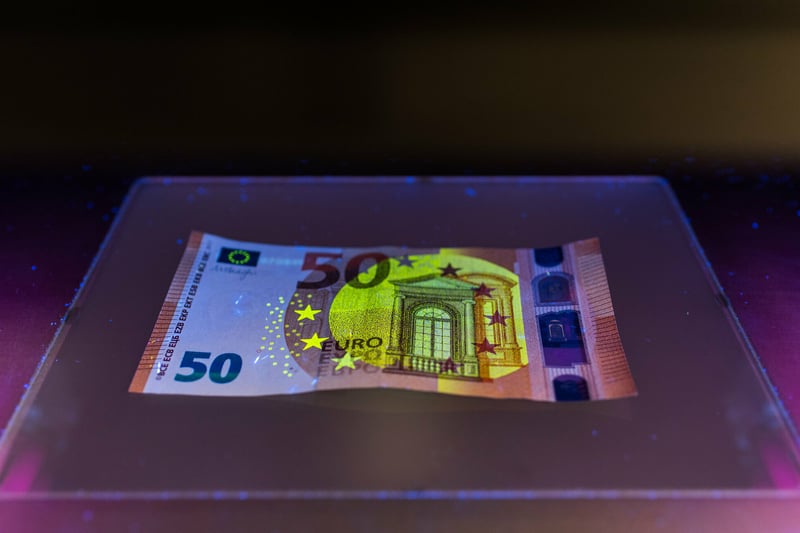
Invest in Counterfeit Detection Tools: Tools such as UV light detectors or magnifying gadgets can help staff in recognizing counterfeit currency during transactions.
-
Train Employees: Regular employee training on how to recognize counterfeit bills is crucial. Employees ought to recognize with the essential security features of the currency they deal with.
-
Limit Cash Transactions: Encouraging digital payment methods can considerably minimize the threats connected with counterfeit currency.
-
Monitor Transactions: Implementing a system to examine big or suspicious cash transactions can assist determine potential counterfeit notes before they get in circulation.
-
Report Counterfeits: Establishing a procedure for reporting suspected counterfeit bills to local authorities is vital for keeping currency stability.
FAQ
Q: What must I do if I receive a counterfeit bill?A: Report it immediately to regional police and the U.S. Secret Service. Prevent passing it along to somebody else. Q: Is it legal to hold onto a
counterfeit expense if I didn’t understand it was fake?A: While you are not criminally liable if you unconsciously receive counterfeit money, it’s a good idea to report the event. Q: Can fake bills be found by ATMs?A: Many modern ATMs are geared up with counterfeit detection innovation, but they can still error counterfeit bills, so manual screening is typically required. Q: Are older bills more most likely to be counterfeited?A: Older bills may do not have newer security features, making them more prone to counterfeiting than contemporary currency. Counterfeit currency continues to be a pushing issue for both
customers and services. By comprehending the history, recognizing different kinds of counterfeit bills, and using efficient detection techniques, people and businesses can much better protect themselves against the monetary dangers related to counterfeit currency. Staying notified and vigilant is the very first step in combating this extensive monetary criminal activity.